
Everyday Chills:Hidden Horrors
KARAAGE GAMES LLC.Trivia
3.697.00 Reviews
- Version
- 1.0.7
- Installs
- 500.00K
- Age Rating
- Mature 17+
Screenshots

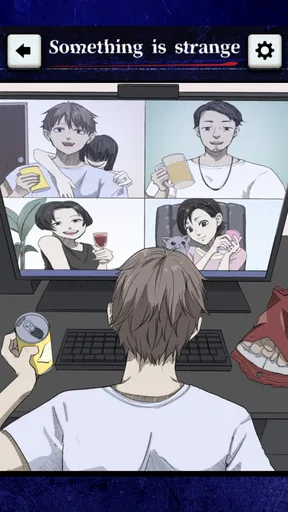
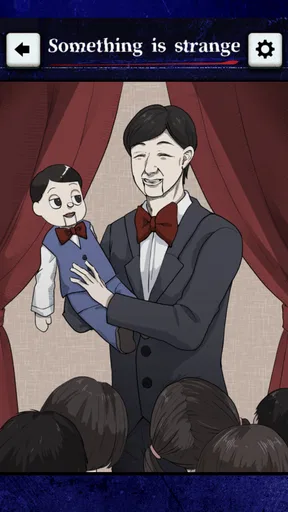
Our Review of Everyday Chills:Hidden Horrors
 Analysis by Appyee
I spent time with Everyday Chills:Hidden Horrors as a mobile trivia game built around scary illustrations and mystery-solving. Its basic idea is easy to understand: look closely, notice what feels wrong, and use that observation to work through a disturbing visual puzzle. That makes it different from a standard quiz that depends mainly on recalling facts. Here, attention and interpretation matter more than encyclopedic knowledge.
The game is published by KARAAGE GAMES LLC. and is free to play, which makes it simple to try without committing money first. It is listed for mature audiences aged seventeen and above, an important point for anyone choosing a game for a shared phone or family device. The current version is 1.0.7, and it runs on Android six and later. I would describe it as a compact choice for people who enjoy unsettling images, visual riddles, and short sessions rather than a long-form adventure.
How the visual mysteries work in practice
The strongest part of the experience is the way an ordinary-looking scene becomes suspicious once I stop treating it as a picture and start treating it as evidence. A room, person, or everyday situation can invite a quick glance, but the game rewards a slower second look. I found myself checking relationships between objects, unusual placement, facial expressions, and details that would be easy to dismiss in a normal illustration.
That approach gives the trivia label a particular flavor. I am not answering questions about geography or history from memory. Instead, I am testing whether I can interpret a visual clue and connect it to the hidden danger in the scene. Players who enjoy spot-the-difference puzzles, visual riddles, and horror illustrations will probably understand the appeal quickly.
The game works best when I resist the urge to tap randomly. A useful routine is to scan the whole image first, divide it into areas, and then compare details that seem deliberately emphasized. I also found it helpful to ask what the scene wants me to assume. Horror puzzles often depend on a normal explanation being slightly too comfortable, so questioning that first impression is more productive than staring at the most obviously frightening object.
The real skill is controlled observation, not fast reflexes. That is good news for players who prefer thoughtful challenges, but it also means the game may feel slow to anyone looking for constant action. The tension comes from discovering the implication behind a picture, not from movement, combat, or rapid scoring.
Readability and navigation during a session
Because the core activity is visual inspection, readability is central to whether the game feels fair. I needed to look at the full composition before deciding where the important clue might be. On a phone with a smaller display, tiny details naturally demand more concentration than they would on a larger screen. That is not automatically a flaw, since close examination is part of the design, but it does make screen size and viewing distance meaningful.
I recommend playing with the phone held steadily and at a comfortable distance rather than rushing through a level while walking. If the image is crowded, I would first identify the broad shapes and then move toward the suspicious area. This two-pass method reduces the chance of locking onto the first unusual detail and missing the clue that actually explains the mystery.
The navigation is easiest to understand when I treat each scene as a self-contained question. I can focus on the illustration, form a theory, and then make a choice. That simple rhythm is less demanding than a game filled with inventory menus, branching maps, or layered controls. For users who become overwhelmed by complicated interfaces, the limited visual task may be more approachable than a conventional horror adventure.
At the same time, visual simplicity should not be confused with universal ease. A player with reduced vision may struggle when the solution depends on a small difference in an already busy scene. Someone using a phone with low brightness, glare, or a heavily cracked display may also lose important information. I would avoid judging the difficulty until trying it on the actual device where it will be played.
One practical tip is to increase the surrounding comfort rather than immediately assuming the puzzle is impossible. I played more accurately when the screen was clean, the room was evenly lit, and notifications were not interrupting the image. Those changes do not alter the game, but they reduce avoidable distractions and make the visual reasoning feel more intentional.
Motor demands and sensory comfort
This is not a game that appears to depend on complex hand coordination. Its main demand is selecting or interacting with the relevant part of a scene, so it should suit players who prefer low-pressure interaction over rapid swipes and repeated button combinations. That makes it a potentially comfortable option for a short break, especially when a reflex-heavy action game would be tiring.
Still, low motor intensity does not mean every interaction will be effortless. Precision can matter when a clue occupies a small area, and repeated tapping to test theories may become frustrating for someone who has difficulty with fine touch control. I would approach it with deliberate movements and avoid playing one-handed if that makes the phone unstable. A stand or a two-handed grip can make close inspection less tiring.
The sensory side is more complicated because the entire identity of the game is built around fear and disturbing imagery. Even without fast action, the subject matter can be uncomfortable for people who are sensitive to horror, grotesque scenes, or illustrations designed to create unease. The mature age classification is therefore more than a minor label; it should guide the decision to play in a shared space or around younger users.
I would also be cautious about recommending it to someone who wants a calm visual puzzle with neutral themes. The same image-based design that makes the mysteries memorable can make the experience unsuitable during moments of anxiety, before sleep, or in an environment where startling content would be inappropriate. Players who enjoy suspense but dislike graphic or unsettling presentation should consider that trade-off before installing.
For a more comfortable session, I would begin during the day, keep the volume at a level that does not add unnecessary tension, and stop after a scene if the mood becomes unpleasant. The game is free, so there is little financial risk in testing it, but free access does not remove the emotional cost of content that simply is not a good match.
Where it fits into everyday use
I found the format better suited to short, focused moments than to a long commute where I need to divide attention. A realistic use case would be sitting in a quiet café, waiting for an appointment, and working through a few visual mysteries while keeping the phone close. Each scene gives me a clear mental task, and I can put the device down without needing to remember a complicated control scheme.
I would not play it while walking, traveling through a crowded station, or switching between conversations. The clues depend on concentration, and the mature horror tone may also be awkward in a public setting. A person glancing over might see an unsettling image without understanding that it is part of a puzzle. For situational access, privacy and attention matter almost as much as the phone itself.
It can also work as a conversation game between friends, but only if everyone is comfortable with the subject matter. Passing the phone around to debate what looks suspicious can make the visual reasoning more social than a solitary quiz. On the other hand, a group may accidentally reveal the answer too quickly, so players who want the satisfaction of solving each mystery alone should use headphones only if the audio environment is appropriate and keep the screen to themselves.
The game is less suitable for background play. I cannot get much from it while watching television, listening closely to a meeting, or answering messages. Unlike a trivia app that lets me guess from general knowledge while multitasking, this experience asks me to inspect an image carefully. That is a strength when I want engagement, but a limitation when I only have partial attention available.
Its Android requirement is also worth considering when choosing a device. Since it supports Android six and later, people using an older phone should check the operating system before planning a session. On newer devices, screen quality will probably influence the experience more than raw performance: a larger, sharper display can make close visual reading less tiring, while a small or dim screen can turn a fair observation task into guesswork.
What the game does better than ordinary trivia
Compared with conventional trivia apps, this game asks for interpretation rather than stored knowledge. That gives it a useful advantage for players who dislike feeling tested on facts they either remember or do not. I can arrive without studying and still have a chance because the information needed to reason about the scene is presented visually.
It also creates a different kind of replay conversation. In a typical quiz, the answer is often a fact with a clear explanation. Here, the interesting part is why a detail changes the meaning of the entire illustration. I enjoyed discussing the clue itself more than I would discuss a missed question about a capital city. That makes it a reasonable choice for friends who like solving mysteries together.
The trade-off is depth. A large trivia collection can offer broad subjects, score tracking, timed rounds, and a clear sense of knowledge progression. A visual horror mystery game is narrower by design. If I want to improve my factual recall, compete with other players, or play through an elaborate narrative, a traditional quiz platform or story-driven horror game may be a better fit.
It is also less accommodating to casual guessing. In a general quiz, an educated guess can sometimes be enough. In these illustrated mysteries, guessing without examining the scene removes much of the point. Players who prefer immediate feedback and quick rewards may find the deliberate pace less satisfying, especially if they do not enjoy looking at the same image from several angles.
Barriers that still affect the experience
The biggest remaining barrier is the dependence on visual detail. Anyone with low vision, color-perception differences, or difficulty distinguishing crowded illustrations may face a harder experience, particularly when the clue is subtle. I would not assume that a simple interface solves this problem. The challenge itself is visual, so accessibility depends heavily on how clearly each scene can be perceived on a particular display.
People with attention-related difficulties may also have mixed results. The focused, single-image structure can be helpful because it limits the number of active tasks, but horror artwork may contain many competing details. A helpful personal workflow is to inspect the image in a fixed pattern, such as top to bottom and left to right, instead of jumping randomly between objects. That turns an open-ended search into a repeatable process.
Users who are sensitive to fear or disturbing themes face a different barrier: the content may be emotionally unsuitable even when the controls are manageable. I would not recommend it simply because someone likes puzzles. The visual tone is essential to the product, and a person looking for gentle brain training should choose a non-horror alternative instead.
There is also a social barrier for households sharing one device. The mature rating means parents and guardians should decide whether the game belongs on a family tablet before allowing younger players to browse it. A free game can be easy to install casually, but the age label deserves the same attention as the gameplay. I would treat it as personal entertainment rather than a universally appropriate group activity.
Finally, the average rating sits at 3.6 from around three thousand ratings, with close to a hundred written reviews. I read that as a sign to keep expectations measured rather than assuming the concept will work equally well for everyone. The game has found a substantial audience, with over half a million installs, but popularity does not remove the individual questions of visual comfort, horror tolerance, and preferred pace.
Who should try it, and who should skip it
I would recommend it to someone who enjoys eerie illustrations, visual deduction, and compact mobile puzzles. It is especially appealing if you like finding the one detail that changes an ordinary scene into something sinister. The free price makes experimentation easy, and the low emphasis on reflexes gives thoughtful players a chance to engage on their own terms.
I would also suggest it to friends looking for a discussion starter rather than a competitive knowledge test. One person can inspect the image while another proposes explanations, then they can compare interpretations. That use makes the game feel less like a score-chasing app and more like a collection of tiny mysteries.
I would skip it if my priority were factual learning, fast multiplayer competition, a relaxing atmosphere, or a long cinematic campaign. I would also choose something else for a child, for a person who avoids mature horror, or for anyone who finds small visual differences difficult to perceive. In those cases, a conventional trivia game with larger text and neutral subjects, or a non-horror puzzle designed around clear shapes, would be the more considerate option.
My inclusive verdict
Everyday Chills:Hidden Horrors has a clear identity: it turns trivia into close visual reading and uses unsettling illustrations to make ordinary scenes feel questionable. I appreciated that its central challenge does not require fast reflexes or prior subject knowledge. With a steady grip, a clean screen, good lighting, and enough time to inspect each scene, I found it easy to settle into the intended rhythm.
Its inclusiveness has limits that come directly from that design. Players who need large, highly legible visual information may encounter difficulty, and people sensitive to mature horror may find the atmosphere more demanding than the controls. It is also not a good background activity because the clues require attention. Those are important boundaries, not minor complaints.
Overall, I see it as a worthwhile free experiment for adults who want short, eerie observation puzzles on Android. I would approach it with realistic expectations, test it in a comfortable setting, and judge it by whether the illustrations remain readable and the tone remains enjoyable. If you want a thoughtful visual mystery rather than a conventional fact quiz, this is a distinctive choice; if you need calm content, broad accessibility, or deep competitive systems, another category will serve you better.
Verdict
Strengths of Everyday Chills:Hidden Horrors
- Short sessions make it easy to play during quick breaks.
- Atmospheric sound design strengthens the horror experience.
- Hidden-object puzzles offer a relaxing pace between tense moments.
- Hints are available when a scene becomes difficult to read.
- The dark visual style suits players who enjoy classic mystery games.
Limitations of Everyday Chills:Hidden Horrors
- Some scenes can feel repetitive after extended play.
- Small objects may be difficult to spot on smaller phone screens.
- The suspense is more atmospheric than genuinely frightening.
- Progress may feel slow for players seeking action or combat.
- Certain visual details can blend into the background unnecessarily.
Other Releases by KARAAGE GAMES LLC.
View All
Patrol Time! Instant Arrest!
Simulation4.3

Toxic Love: Dark Boyfriends
Simulation4.2
Similar Picks in This Category
View All
Millionaire 2026 Quiz & Trivia
Quiz & Trivia Games by Submarine Apps4.5

Brain Test 2: Tricky Stories
Unico Studio4.7

Trivia Crack: Brain Quiz Games
etermax4.4

QuizzLand. Quiz & Trivia game
Quiz & Trivia Games by Mno Go Apps4.8

Brain Test: Tricky Puzzles
Unico Studio4.7

Logo Quiz
bubble quiz games4.5
Frequently Asked Questions
What is Everyday Chills: Hidden Horrors?
Everyday Chills: Hidden Horrors is a casual horror puzzle game focused on discovering unsettling details in ordinary-looking scenes. Players examine environments, search for hidden objects or suspicious clues, and complete challenges that gradually reveal creepy situations. Its appeal comes from turning familiar daily locations into tense moments, making it suitable for players who enjoy atmospheric mysteries rather than fast-paced action.
How does the gameplay work in Everyday Chills: Hidden Horrors?
The main gameplay revolves around observation and interaction. You typically inspect a scene, identify unusual elements, solve simple visual puzzles, and make progress by finding the correct clues. The game rewards patience and attention to detail, since some hidden horrors can blend into the background. It is easy to understand for beginners, although later stages may require careful searching and logical thinking.
Is Everyday Chills: Hidden Horrors suitable for children?
The game may be simple to play, but its horror themes are not necessarily appropriate for every child. It uses eerie situations, disturbing imagery, suspenseful presentation, and unexpected discoveries to create tension. Parents should check the age rating and preview the content before allowing younger players to download it. Players who dislike creepy scenes or psychological suspense may also find it uncomfortable.
Does Everyday Chills: Hidden Horrors require an internet connection?
Whether an internet connection is needed can depend on the version installed and the features currently available. Core puzzle stages may work offline in some releases, while advertisements, updates, cloud features, rewards, or other online services can require connectivity. Before playing without internet access, it is best to test the game after installation and review the store listing for the latest requirements.
Is Everyday Chills: Hidden Horrors free to download and play?
Everyday Chills: Hidden Horrors may be available as a free download, but free access does not always mean that every feature is included without restrictions. The game can contain advertisements, optional purchases, or progression systems designed around additional content. Check the Google Play or App Store listing for current pricing, in-app purchase details, supported devices, and privacy information before downloading.
Play our best games!


